

Dopamine fasting

What Dopamine Fasting Can Teach Us About Buddhist Mindfulness
Have you ever caught yourself opening an app on your phone, closing it out of boredom, and then immediately reopening it three seconds later?
Don't worry—you aren’t broken. You're just human, living in a world specifically designed to keep your brain hooked.
What is the way out of this?
"Dopamine fasting"—the practice of temporarily cutting out stimulation like social media, notifications, sugary treats, and background noise to "reset" your brain.
While neuroscientists might debate whether you can literally fast from a neurotransmitter, the underlying impulse behind it is ancient. Long before biohackers started tracking their screen time, Buddhist philosophy offered a gentle, profound framework for stepping off the treadmill of constant craving.
If you’re feeling burnt out by digital noise, here is why viewing dopamine fasting through the lens of Buddhist mindfulness might be the reset you actually need.
The zen story of the Hungry Ghost

In zen Buddhist teachings, there is a concept known as the Preta, or "Hungry Ghost." These creatures are depicted with giant, empty bellies and needle-thin necks. No matter how much they consume, they can never swallow enough to satisfy their hunger.
It sounds dramatic, but isn't that remarkably close to how endless scrolling feels?
When we scroll through short-form videos, check emails compulsively, or shop online, our brains release dopamine—not because we are experiencing deep happiness, but because we are anticipating a reward. It is the chemical of wanting, not having.
Buddhist teachings call this cycle Tanha (craving or thirst). When we feed craving with instant gratification, we don't cure the thurst; we just train ourselves to feel thursty more often.
Dopamine Fasting vs. Buddhist Renunciation

The modern concept of dopamine fasting often sounds like a rigid challenge: turn off all devices, eat plain food, don't look anyone in the eye, and power through the boredom for 24 hours.
But if you approach it purely as an act of willpower, you miss the point. Buddhist practice offers a much warmer alternative:
Renunciation as freedom.
Rather than punishing yourself by taking things away, true mindfulness asks you to step back and ask a quiet question: “What happens to my mind when I let go of this for a moment?”
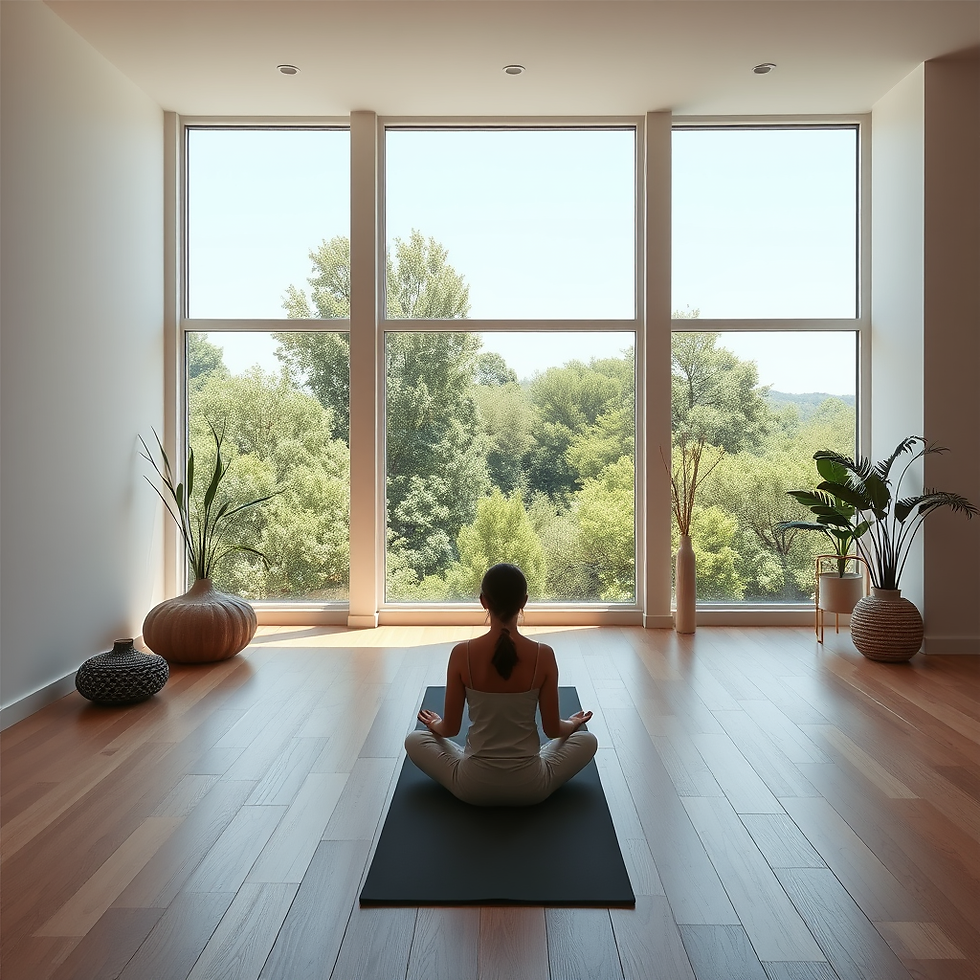
When you put your phone in another room for an afternoon, you aren't depriving yourself of life—you are giving your nervous system permission to rest. You are creating space to notice the warmth of your mug of tea, the sound of rain against the window, or the simple rhythm of your own breathing.

3 Mindful Ways to Practise a "Dopamine Reset"
You don't need to lock yourself in a dark room or take a ten-day silent retreat to reclaim your focus. Here are three gentle, Buddhist-inspired ways to introduce dopamine fasting into your daily routine:
1. Practise Upekkha (Equanimity) with Your Urges
When you feel the sudden urge to check your phone, don't immediately give in—but don't scold yourself either. Pause for three full breaths. Observe the urge like a wave rising in the ocean. Notice where you feel it in your body (a tightness in the chest, a restlessness in the fingers). Watch it peak and naturally fade away. You are learning that an urge is just a sensation, not a command.
2. Create Sacred Spaces of Stillness
In traditional monasteries, certain areas and times are reserved for total silence. Try designating "quiet zones" in your daily life. Make your dining table a screen-free space so you can truly taste your meals, or commit to taking the first 30 minutes of your morning without checking notifications.
3. Swap High-Dopamine Hits for Deep Sukha
Neuroscience distinguishes between short-term pleasure spikes and long-term well-being. In Buddhism, genuine, lasting happiness is called Sukha. While a funny video gives you a quick spike of delight, activities like walking in nature, journaling, or meditating nourish a deeper, more sustainable sense of peace.

Finding Stillness in the Noise
Dopamine fasting isn't about fleeing from the modern world or treating technology as evil. Technology is simply a tool. The goal is to shift from being a passive consumer driven by unconscious craving to an active, present participant in your own life.
The next time you reach instinctively for your phone, pause for just a moment. Take a breath, drop your shoulders, and ask yourself: What am I actually searching for right now?
Often, the peace we are looking for isn't hidden at the bottom of a feed—it's right here in the quiet space we keep ignoring.
Below is a printable pdf of how to track your Dopamine fasting. You can access it through this link.
Sending love,
Iresha Kariyawasam


Comments